10 Questions to Ask Before Hiring a Contractor or Interior Designer

If you are thinking about renovating, it is tempting to call a few contractors and ask, “How much would it cost to redo this room?”
It is a completely reasonable question.
The challenge is that “redo this room” can mean something different to every person who walks through your door.
One quote may include new lighting, flooring, trim, and painting.
Another may assume those elements are staying exactly as they are.
One contractor may account for work in an adjoining hallway or room, while another may price only what is directly in front of them.
That is why one of the most important things you can do before comparing quotes is to make sure everyone is pricing the same project.
And before you hire a contractor or interior designer, it is worth asking a few questions about how they work, communicate, and plan.
Renovating your home does not need to feel intimidating. With a clear plan and experienced professionals around you, you can make decisions with much more confidence.


Before You Request Quotes, Get Clear on These 3 Things
Before you begin interviewing contractors or collecting pricing, spend some time defining what you actually need the renovation to accomplish.
1. What is not working?
Start with your everyday frustrations.
Is the kitchen crowded when two people are cooking?
Is there nowhere to put coats, shoes, and bags when you walk through the door?
Does your bathroom lack storage?
Are certain rooms rarely used because the layout no longer suits the way you live?
These practical frustrations are often more helpful than beginning with finishes or inspiration images. They tell your design team what the renovation actually needs to solve.
2. What are you changing, and what are you keeping?
Updating finishes within an existing layout is very different from moving plumbing, removing walls, or replacing cabinetry.
It is also important to think beyond the room itself.
If you replace the flooring, does it continue into the hallway?
If cabinetry or walls are removed, will adjoining walls, ceilings, or trim need to be repaired?
Does changing one area affect lighting, electrical, or HVAC elsewhere?
You do not need to have every decorative detail decided before you begin.
You do need a solid plan and a clearly defined scope before construction starts.
3. What is your comfortable investment range?
An honest budget conversation allows your designer to develop options that make sense for you.
It helps determine where it makes sense to invest, where you might simplify, and which elements could potentially wait for another phase.
Your renovation budget should also leave some room for conditions that cannot always be seen until construction begins, particularly in older homes.
Knowing your comfortable investment range is not about limiting the design. It gives your team the information they need to make smarter recommendations.
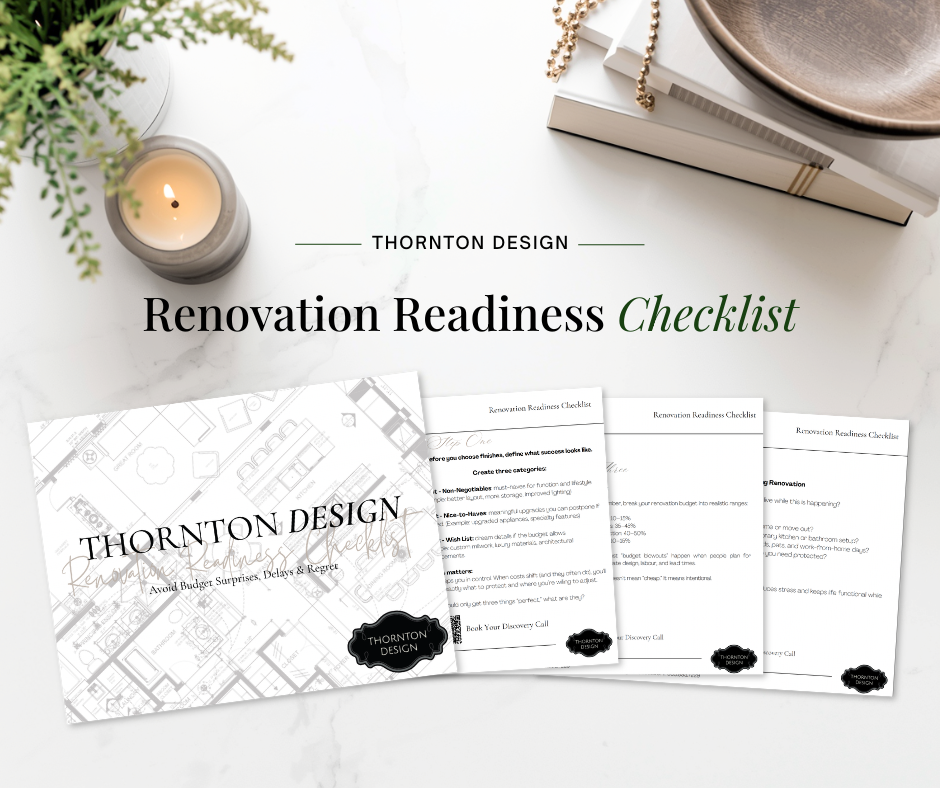
Planning a renovation? Start here.
Our complimentary Renovation Ready Guide walks you through the key decisions to consider before you begin, so you can approach your project feeling more prepared and confident.
Never Start a Renovation Without a Solid Plan and Clear Pricing
Once construction begins, decisions become more urgent.
If something has not been selected, specified, or properly priced beforehand, you may suddenly find yourself making decisions while trades are waiting or while a room is already under construction.
That pressure is where changes can begin affecting both your budget and your timeline.
At Thornton Design, we develop the design and provide pricing for the individual elements in the space before construction begins. This allows you to understand what you are investing in and make thoughtful decisions while there is still time to consider your options.
Once you have that foundation, you are also in a much better position to speak with potential contractors and other professionals.
Here are the questions we recommend asking.
1. How Long Have You Been in Business, and Can You Share Referrals?
Experience matters, particularly when you are making a significant investment in your home.
Ask how long the company has been operating, what types of projects they typically complete, and whether they can provide references or examples of previous work.
Years in business are not the only measure of a good professional, but you should feel confident that the people working on your home have experience managing projects similar to yours.
2. Are You Fully Insured and Properly Qualified for This Type of Work?
Depending on the scope of your renovation, there may be different permits, trades, insurance requirements, and professional qualifications involved.
A reputable contractor or design professional should be comfortable explaining what applies to your project and how those requirements will be addressed.
It is one of the basic ways you can help protect your home and your investment.



3. Have You Completed Projects Similar to Mine?
A cosmetic refresh is very different from renovating a kitchen, reworking a floor plan, or making significant changes to an older home.
Ask about projects with a similar scope, age of home, and level of complexity.
Experience with comparable projects can be especially valuable in established Toronto and GTA neighbourhoods, where older homes may have conditions that are not immediately obvious before work begins.
4. Do You Have Experience With Accessibility or Aging-in-Place Planning?
If you are renovating a home you plan to enjoy for many years, it is worth considering how well it will continue to serve you.
That might include improving circulation, planning more accessible bathrooms, choosing better lighting or making everyday storage easier to reach.
Even if accessibility is not something you need today, thoughtful decisions made during a renovation can make your home more comfortable and functional well into the future.
5. What Is Your Process From the First Meeting to the Final Walkthrough?
A professional should be able to walk you through their process clearly.
When is the scope established?
When are budgets discussed?
When are layouts, materials, and fixtures selected?
Who prepares drawings and specifications?
When does contractor pricing happen?
When are final decisions approved?
And what happens once construction begins?
A defined process helps prevent important decisions from being left until the last minute.
At Thornton Design, our D.E.T.A.I.L.™ Method is designed to take homeowners through these decisions in a logical order so the project is well planned before work begins.
6. Who Will Be My Main Point of Contact, and How Will We Communicate?
There can be a surprising number of people involved in a renovation.
Your designer, contractor, electrician, plumber, millworker, suppliers, installers, and other trades may all need information at different stages.
Ask who your main point of contact will be and how communication is handled throughout the project.
Will you receive regular updates? Who should you contact with questions? Who is responsible for coordinating information between the design team and trades?
Clear communication helps keep small questions from becoming larger problems.
7. How Do You Help Clients Stay on Budget When Pricing or Materials Change?
Pricing can change during the life of a renovation.
Products may be discontinued. Material costs can increase. Something unexpected may be discovered behind a wall. You may decide that one part of the project is worth investing more in and simplify somewhere else.
Ask how your contractor or designer manages these conversations.
The goal is not to find someone who promises that nothing unexpected will ever happen.
It is to work with professionals who plan carefully, communicate changes clearly, and help you understand your options before decisions are made.
8. How Do You Handle Revisions if I Change My Mind?
It is normal for ideas to evolve during the design process.
You may see a layout differently once it is drawn. A material you initially loved may not work with another selection. Or you may decide that something you originally planned is no longer a priority.
Ask how revisions are handled, how many revisions are included, and what happens if the scope changes.
Having those expectations established in advance makes the process easier for everyone.
9. How Do You Confirm Final Selections Before Ordering and Construction?
There are hundreds of details involved in even a relatively straightforward renovation.
Cabinet finishes. Hardware. Lighting. Plumbing fixtures. Flooring. Paint colours. Dimensions. Quantities. Lead times. Installation requirements.
There should be a clear process for documenting and confirming those decisions before anything is ordered or installed.
Ask how selections are recorded, approved, and communicated to everyone involved in the project.
The more decisions that can be made thoughtfully in advance, the fewer decisions you will need to make under pressure during construction.
10. What Warranty, Follow-Up or Aftercare Do You Provide?
It is also important to understand what happens once construction is complete.
Will there be a final walkthrough?
How are deficiencies handled?
Who should you contact if something needs attention afterward?
Are there warranties associated with workmanship, furnishings, fixtures, or other materials?
Understanding the follow-up process gives you a clearer picture of the level of service you can expect from beginning to end.

When Comparing Contractor Quotes, Compare the Same Scope
This is one of the most important things homeowners can do.
If you are asking several contractors to price your renovation, give each one the same drawings, specifications and scope of work.
Otherwise, you may think you are comparing three prices for the same project when you are actually looking at three very different scopes.
The lowest quote may not necessarily represent the lowest final cost. It may simply leave out something that another contractor has included.
An apples-to-apples comparison helps you understand what you are actually paying for and make a more informed decision about who you trust with your home and your hard-earned money.
The Right Professionals Should Make Renovating Feel More Manageable
You do not need to become an expert in construction before renovating your home.
You also should not have to spend your evenings researching every fixture, chasing trades or trying to determine whether a quote includes everything it should.
That is part of what experienced professionals are there to help you with.
We know our clients are busy. Pulling together the details, asking the right questions, coordinating the moving parts and managing the design process are things we are happy to take care of.
The goal is not a renovation with absolutely no unexpected moments. Homes, especially older ones, can surprise us.
The goal is to have a plan, understand your investment and know that you have experienced people helping you navigate the decisions along the way.
Your Simple Plan Before Hiring Your Renovation Team
Define what is not working and what you want the renovation to accomplish.
Establish your scope and comfortable investment range before collecting quotes.
Ask each professional the same questions about process, communication, and experience.
Make sure contractors are pricing the same drawings and scope of work.
Choose the team you trust to protect both the process and the final outcome.

Planning a Renovation?
If there is a space in your home you have been thinking about changing, our complimentary Renovation Readiness Guide is a helpful place to start.
It walks you through some of the decisions to consider before your project begins, so you can approach your renovation feeling informed, organized, and prepared.
Download the Renovation Ready Guide →
And if you would prefer to have an experienced team help you define the scope, develop the design, and prepare your project before construction begins, book a Discovery Call with Thornton Design →
We work with homeowners throughout Toronto, Vaughan, and the surrounding GTA on design, décor, and renovation projects.
We would be happy to guide you through the next steps.